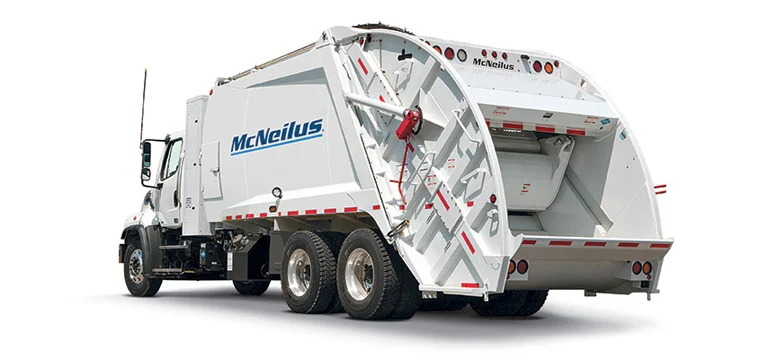
Choosing a refuse truck is a significant investment for waste management companies and municipal fleets. The vehicle must match the collection method, route layout, container types, expected waste volume, and available maintenance resources. Comparing trucks carefully before purchasing can help prevent operational limitations and unnecessary costs later.
McNeilus side loaders offer different configurations for residential waste collection, including Zero Radius, AutoReach, and Manual/Automated models. Each option is intended to address particular collection needs. Fleet managers should compare these options using practical operating requirements rather than relying on a single feature or purchase price.
Identify the Collection Requirements
Begin by examining the routes the truck will serve. Consider the number of stops, typical cart sizes, collection frequency, road width, traffic, turning space, and expected waste volume. These factors influence which lifting system and vehicle configuration may be appropriate.
A route with narrow streets and limited curbside clearance may require a different approach from one with wide roads and predictable cart placement. Routes with extra materials may also need a collection method that accommodates items beyond standard automated cart pickups.
Managers should review difficult locations as well as average route conditions. A truck that works well on most streets may still create delays if it cannot safely access several important collection points.
Compare the Zero Radius Design
The McNeilus Zero Radius side loader is designed for routes where restricted clearance can make container collection difficult. Its arm design reaches toward the container rather than relying on a wide outward swing. This can be useful in certain narrow streets, alleys, and areas where parked vehicles limit space.
Fleet managers should assess whether this design addresses the actual obstacles on their routes. They should also verify the truck’s dimensions, available body capacity, chassis options, and compatibility with their collection procedures.
A specialized arm design can be valuable, but it should not be the only purchasing criterion. Maintenance requirements, operator training, payload limits, and parts support remain important.
Compare the AutoReach Option
McNeilus AutoReach features a lifting arm designed to reach outward and side-to-side. Atlantic Heavy Duty lists lifting capacity of up to 2,000 pounds for this model. Buyers should verify the applicable specifications for the precise configuration being considered.
This design may suit routes where carts are not always positioned at the same point relative to the truck. However, the actual benefit depends on cart placement, road layout, operating conditions, and the limits of the selected equipment.
Before choosing AutoReach, managers should examine representative route locations and confirm that its capabilities match their collection requirements.
Evaluate the Manual/Automated Configuration
The McNeilus Manual/Automated side loader combines an automated arm with a manual loading arrangement. This can provide flexibility on routes where crews occasionally encounter additional materials that cannot be collected through the usual automated cart process.
The potential benefit should be weighed against the collection method, safety procedures, and workload of the crew. Manual loading introduces different physical demands and should be managed with appropriate training and safe handling practices.
Fleet managers should estimate how often manual collection is required and whether this flexibility justifies the chosen configuration. If most stops involve standard compatible carts, another model may better match the route’s priorities.
Check Capacity, Payload, and Chassis Compatibility
Body capacity is an important comparison point, but it does not by itself determine the amount of waste a truck can carry. Vehicle weight, axle ratings, legal limits, and waste density also affect usable payload.
McNeilus side loader configurations are offered with different body capacities and chassis combinations. Buyers should confirm the current specifications for the model they intend to purchase, including the chassis, body dimensions, lifting equipment, and applicable weight ratings.
The selected truck should match both the volume and weight of the waste collected. Managers should also consider maneuverability, wheelbase, turning requirements, and whether the vehicle can safely access the intended route.
Compare Technology and Diagnostics
Some McNeilus side loader configurations offer McNeilus CODE diagnostic capabilities. The availability and functions depend on the model and specification. Buyers should ask which diagnostic tools are included and how they can assist operators and technicians.
Technology can help identify certain issues and support troubleshooting, but it does not eliminate the need for inspections and qualified repairs. The value of diagnostic features depends partly on the fleet’s maintenance processes and access to trained personnel.
Managers should also assess whether operators will need additional training to use the selected controls and equipment effectively.
Review Maintenance, Parts, and Warranty Support
The truck’s purchase price is only one part of total ownership cost. Maintenance, parts, labor, fuel or energy, training, insurance, and downtime should all be considered.
Before purchasing, ask about routine service requirements, warranty terms, parts availability, and the process for obtaining technical assistance. It is useful to understand the support available for the exact configuration rather than assuming that every model has identical requirements.
Atlantic Heavy Duty provides information about McNeilus side loaders and offers parts support for refuse vehicles. Buyers should confirm the service territory and availability of assistance for their operation.
Compare the Total Cost of Ownership
A lower initial price does not always mean a lower long-term cost. A vehicle that poorly matches the route may require more time to complete collections or create unnecessary maintenance challenges. Conversely, additional features may not provide sufficient value if the route does not need them.
Fleet managers should compare the expected purchase price, service costs, operating requirements, and projected utilization. They should also consider how easily the truck can be incorporated into existing maintenance and training processes.
Conclusion
Comparing McNeilus side loaders requires a balanced review of route conditions, lifting design, capacity, chassis compatibility, diagnostics, maintenance, and service support. Zero Radius, AutoReach, and Manual/Automated models provide different approaches to residential collection, so the best option depends on the intended workload.
By gathering route data, verifying specifications, and evaluating total ownership costs, fleet managers can make more informed purchasing decisions. Atlantic Heavy Duty can help buyers explore available configurations and consider parts and support requirements before selecting equipment.